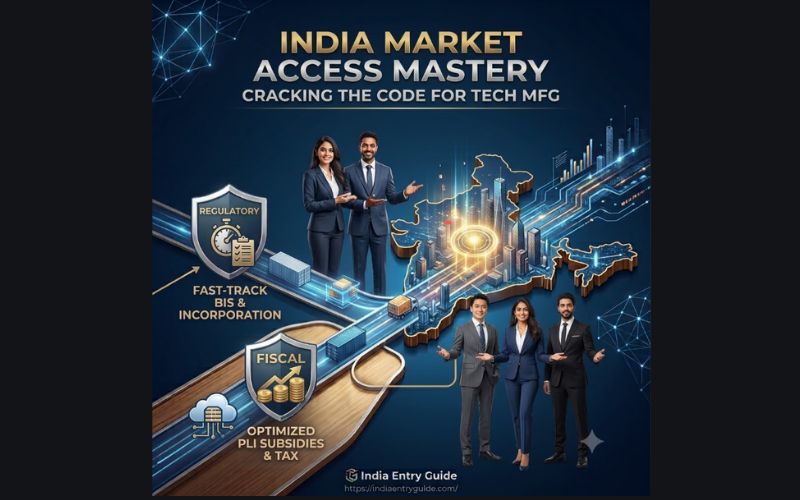
For global boardrooms looking to hedge against geopolitical risks and tap into exponential consumer growth, India represents the ultimate macro frontier. However, treating India as a monolith or applying a copy-paste multinational playbook is the fastest route to operational stagnation.
The Indian market does not just reward capital; it rewards localized agility, regulatory compliance, and a deep understanding of multi-tiered consumer segments. For C-suite executives and expansion directors, decoding India’s unique business architecture is a critical step to turning market potential into sustainable corporate revenue.
The Triad of Modern Indian Market Entry
| Strategic Pillar | Core Friction Vector | Localized Resolution Protocol |
|---|---|---|
| Regulatory Navigation | Bureaucratic layers and sudden policy shifts | Proactive technical auditing (BIS/PLI framework alignment) |
| Supply Chain Localization | Fragmented logistics and value-addition mandates | Anchor facilities within Dedicated Freight Corridors & SEZs |
| Consumer Segmenting | Hyper-fragmented, value-conscious demographics | Dual-track engineering (Premium Tier + Scaled Value Tier) |
Executive Insights: Overcoming the Structural Hurdles
1. Transitioning from “Assembling in India” to “Deep Manufacturing”
One of the most defining shifts in India’s modern economic policy is the aggressive discouragement of pure assembly models (SKD/CKD). Global tech and hardware firms can no longer simply ship components to bypass tariffs without investing in local roots.
To achieve true operational efficiency and protect profit margins, corporate planners must align their production milestones with India’s Phased Manufacturing Programmes (PMP). This requires a structured, multi-year plan to source high-value component sub-assemblies locally, effectively locking in long-term fiscal tax cuts and lucrative multi-sector subsidy disbursements.
2. Building a Compliant Regulatory Shield (BIS & Central Digital Governance)
Product compliance is often the single biggest bottleneck that delays time-to-market for international brands. Navigating product approvals through the Bureau of Indian Standards (BIS) or statutory environmental clearances (EPR) requires immediate local accountability.
Foreign enterprises must establish a localized, dedicated compliance desk immediately upon entity incorporation via the MCA SPICe+ system. Pre-clearing your logistics pipeline through domestic NABL-accredited laboratory testing before shipping bulk commercial inventory ensures your supply chain remains friction-free and entirely clear of port-of-entry container detentions.
3. Managing the Multi-Tiered “Value-First” Consumer
The Indian consumer base is uniquely sophisticated—demanding premium, global-standard features at highly optimized local price points. Success requires global leaders to master the balance between high-velocity international exports and localized domestic variations.
By utilizing Special Economic Zones (SEZs) for international trade while simultaneously designing scalable product lines tailored to India’s booming mid-to-high income segments, corporations can achieve structural scale that feeds both global distribution networks and an explosive domestic market.
Strategic Verdict for the Boardroom
- Do Not Outsource Regulatory Responsibility: Relying solely on third-party distributors to manage your local legal compliance or product testing leaves your intellectual property and supply chain highly vulnerable. Establish a direct, controlled local corporate presence early.
- Anchor Operations in Modernized Corridors: Mitigate India’s legacy infrastructure bottlenecks by ensuring your manufacturing and fulfillment nodes are physically anchored within state-backed dedicated freight lines and single-window clearance zones.
📞 CONTACT US
- India HQ : +91 99807 56389
- Seoul Liaison : +82 10-7641-4018
- Email : liminae@adullamcorp.com
- Website : https://adlconsulting.in/
Copyright 2026. India Entry Guide. All rights reserved.