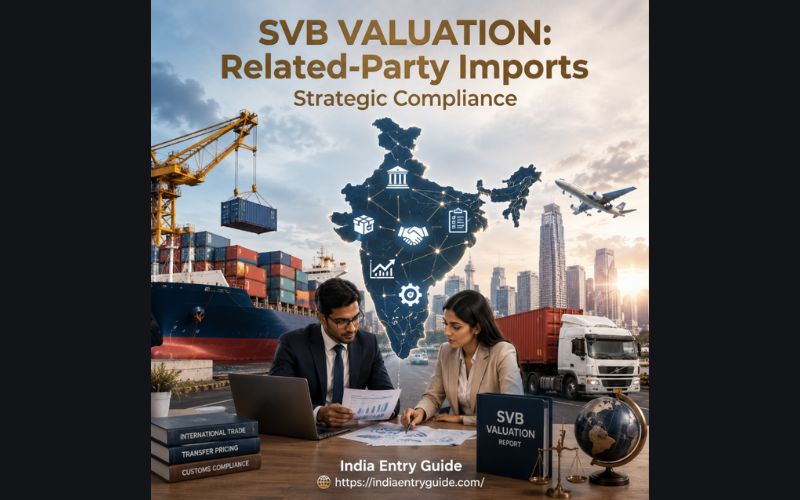
For multinational manufacturing giants, cross-border electronics brands, and automotive conglomerates operating subsidiaries within the subcontinent, importing goods internally requires rigorous compliance. As India enforces stringent customs protocols to prevent base erosion, the Central Board of Indirect Taxes and Customs (CBIC) closely monitors intercompany pricing architectures. Successfully navigating SVB Investigations Related Party India stands as a critical operational prerequisite for any foreign enterprise relying on a synchronized cross-border supply chain.
Under the Indian Customs Act, transactions between “related parties”—such as a foreign parent entity and its localized Indian subsidiary—are automatically flagged for potential undervaluation. The Special Valuation Branch (SVB) is the specialized investigative wing tasked with examining whether these close corporate relationships have influenced the declared invoice value of imported goods. Failing to align your transfer pricing mechanisms and customs declarations with current CBIC circulars triggers provisional duty loading, prolonged cargo hold-ups at major ports, and aggressive financial audits. This operational playbook breaks down how to strategically structure your customs documentation and build a dispute-free compliance moat.
🗺️ Visual Data Card: The India SVB Investigation Runway
To help supply chain directors, logistics heads, and corporate tax desks map out their import valuation compliance infrastructure, we have structured the mandatory procedural layers below. Use this visual guide to review your local entity’s import readiness:
- Layer 1: The Initial Revenue Flag — Declaring related-party status in the Bill of Entry via the digitized customs portal, triggering an automated screening process.
- Layer 2: The Customs Circular 05/2016 Check — Submitting the comprehensive, multi-page Annexure A questionnaire to the proper officer to determine if a full SVB referral is legally required.
- Layer 3: The SVB Investigative Crucible — Providing specialized transfer pricing studies, global allocation keys, and localized financial ledgers to the Special Valuation Branch desk within strict timelines.
- Layer 4: Final Valuation Order Security — Securing a definitive, legally binding Valuation Order that sanitizes your intercompany pricing methodology for subsequent transactions.
🔍 Deep-Dive Analysis: Strategic Defenses Against SVB Investigations Related Party India
1. The Revenue Trigger: Identifying Related-Party Status under Rule 2(2)
The primary mechanism that initiates an intensive look into your supply chain is the self-declaration of relationship status during the customs filing process. Under Rule 2(2) of the Customs Valuation (Determination of Value of Imported Goods) Rules, entities are deemed related if they are officers or directors of one another’s businesses, legally recognized partners, or if a parent firm directly controls 5% or more of the voting stock of the localized Indian subsidiary.
A common operational error for cross-border engineering or technology firms is assuming that matching your prices with an OECD Transfer Pricing study satisfies customs officers. In practice, Indian Customs operates under a separate legal mandate. While income tax authorities look for inflated expenses to minimize local tax, customs authorities search for artificially deflated invoice values designed to evade ad valorem Basic Customs Duties (BCD). To survive an SVB referral, your trade compliance desks must ensure that your transfer pricing reports explicitly demonstrate that the relationship did not influence the import price, utilizing specific “Test Values” or the “Circumstances of Sale” method.
2. Procedural Streamlining: Eliminating Extra Duty Deposits (EDD)
Historically, foreign corporate offices dreaded SVB investigations due to the mandatory imposition of Extra Duty Deposits (EDD), which frequently locked up 1% to 5% of total import values in state escrows during multi-year investigation cycles. Under the modernized framework governed by CBIC Circular No. 05/2016, this systemic friction has been substantially reduced.
Today, if your local entity provides complete documentation and submits a meticulously prepared Annexure A questionnaire at the port of entry, the customs department will typically bypass the imposition of EDD entirely. The investigation proceeds while your daily cargo clears ports under standard duty regimes. However, if your global legal desk fails to supply requested corporate invoices, global cost-sharing agreements, or audited balance sheets within the mandated 60-day statutory window, authorities will instantly apply provisional assessments and load EDD charges, straining local subsidiary cash flows.
3. Reconciling Transfer Pricing (TP) and Customs Valuation Moats
The most significant long-term risk vector during an SVB review is a persistent structural disconnect between your corporate Income Tax Transfer Pricing documentation and your Customs Valuation methodology. The SVB desk will routinely cross-examine data logs filed under Form 3CEB with your customs declarations.
To construct an unassailable defense, multinational enterprises must hardcode a synchronized, dual-compliant pricing policy. If your localized captive unit updates its transfer prices at the end of a financial quarter to stay within an income tax safe harbor, those adjustments must be transparently reported and reconciled with the SVB authorities. Maintaining a continuous, unified data pipeline across both tax frameworks ensures that your organization avoids unexpected double-taxation pitfalls where customs authorities accuse you of undervaluation while income tax officers accuse you of profit shifting.
📊 Indian Customs SVB Investigation & Risk Matrix
| Operational Dimension | Primary Regulatory Driver | Standard Compliant Framework | Primary Enterprise Risk Vector |
|---|---|---|---|
| Relationship Disclosure | Valuation Rules (Rule 2(2)) | Transparent self-declaration in digitized Bills of Entry at the port | Severe penal action under the Customs Act for misstatement |
| Preliminary Screening | CBIC Circular No. 05/2016 | Flawless submission of Annexure A with localized FAR analysis | Automated imposition of Extra Duty Deposits (EDD) on cargo |
| Data Reconciliation | Customs vs Income Tax Codes | Aligning customs invoice pricing with Form 3CEB transfer records | Double-taxation exposure and prolonged asset valuation disputes |
| Operational Certainty | SVB Final Valuation Order | Securing a clean definitive order from the SVB Development Desk | Continuous provisional assessments halting logistics fluidity |
📱 [Quick Slide] 3-Minute Executive Card News
Rapidly review the core compliance and risk-mitigation pillars of Indian Customs SVB reviews. Use these structured insights to brief your international supply chain and trade operations desks.
💳 Card 1: The Valuation Paradox (Customs vs. Income Tax)
- Executive Summary: Customs and income tax authorities view intercompany pricing through completely opposite lenses.
- Operational Check: Income tax officers look for overvaluation to protect domestic profits, while SVB customs officers search for undervaluation to protect tariff revenues. Your documentation must satisfy both criteria simultaneously.
💳 Card 2: Bypassing the Cash Lock (The EDD Strategy)
- Executive Summary: Extra Duty Deposits (EDD) can be completely avoided under modern CBIC circular frameworks.
- Operational Check: Submit your comprehensive Annexure A questionnaire and supporting transfer files immediately upon port entry to clear cargo seamlessly without locking up liquid capital.
💳 Card 3: The 60-Day Timeline (The Document Clock)
- Executive Summary: SVB investigations operate under strict, non-extendable federal response windows.
- Operational Check: Ensure your global corporate registry has ready access to international cost-allocation keys and parent financial records. Missing the 60-day filing cutoff triggers immediate, mandatory EDD loading.
💳 Card 4: Long-Term Consistency (The Valuation Order Moat)
- Executive Summary: Securing a final, clean SVB Valuation Order provides absolute structural stability for your supply chain.
- Operational Check: Once issued, hardcode the valuation parameters directly into your enterprise ERP to ensure every subsequent import bill matches the legally accepted framework perfectly.
Strategic Verdict & Actionable Advice for the Boardroom
- Hardcode Dual-Compliant Clauses into Intercompany Supply Contracts: Ensure that your global intercompany agreements contain specific, data-backed justification for the chosen pricing methodology. Explicitly demonstrating how the base price is constructed from global raw material indices or cost-plus frameworks allows your local team to quickly prove to the SVB officer that your corporate relationship did not influence the import invoice value.
- Maintain Centralized Control Over Your Customs Digital Dashboard: Do not delegate the management of your Indian Customs ICEGATE portal entirely to unmonitored third-party customs brokers. Keep direct, executive-level administrative ownership over your digital compliance credentials to ensure that any SVB clarification notice, automated deficiency memo, or electronic audit alert is addressed instantly within the brief statutory windows, preventing sudden cargo holds at major Indian marine ports.
📞 CONTACT US
- India HQ : +91 99807 56389
- Seoul Liaison : +82 10-7641-4018
- Email : liminae@adullamcorp.com
- Website : https://adlconsulting.in/
Copyright 2026. India Entry Guide. All rights reserved.